
The #1 Pricing Mistake in the $300k–$600k Range (and How to Avoid a Price Cut)

The #1 Pricing Mistake in the $300k–$600k Range (and How to Avoid a Price Cut)
Selling a home in the $300,000–$600,000 range in Texarkana, TX is a little different than selling an entry-level home. Buyers tend to be more selective, they compare homes more carefully online, and they’re quicker to move on if a property feels “off” for the price.
That’s why pricing is the make-or-break decision. If you get it right early, you can create momentum and strong showings. If you miss it, the most common result is the one every seller wants to avoid: a price cut (or multiple cuts).
The good news: most price reductions are preventable—when you know what causes them.
Why pricing matters so much right now (especially online)
Today, nearly every buyer finds homes through search—Redfin, Zillow, Realtor.com, brokerage sites—and most of that searching is done with price filters. So pricing isn’t just “what you want to net.” Pricing is also a marketing decision that determines whether you even show up in the right buyers’ search results.
In Texarkana, market data sources like Redfin and Zillow track trends such as days on market, sale-to-list performance, and price drops—and across many markets, one pattern holds true: listings that miss the mark at the beginning often sit longer, then require reductions to regain attention.
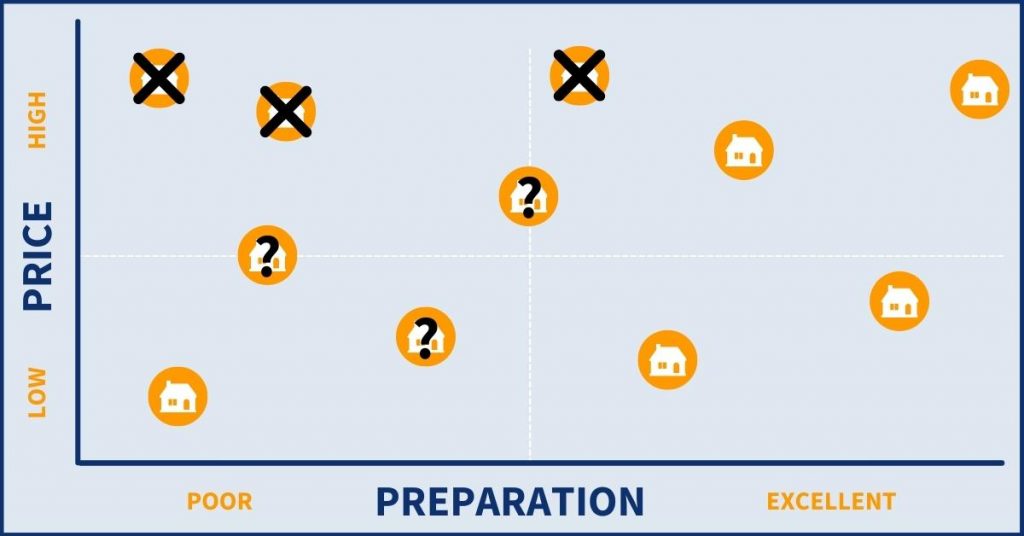
The #1 pricing mistake: Overpricing to “test the market”
The biggest pricing mistake I see in the $300k–$600k bracket is this: a seller prices above where the market supports it, hoping to “test the market” and come down later if needed.
On paper, it sounds reasonable: “Let’s start high. We can always reduce.”
In real life, it usually backfires because the first couple weeks of a listing are your best window for urgency. That’s when serious, ready buyers are watching—especially the ones already touring similar homes.
Here’s what overpricing typically triggers:
- You miss the right buyers’ searches. If a buyer’s max is $450,000 and you list at $465,000, you may never make their shortlist—even if they would’ve paid $450,000–$455,000 with the right presentation and demand.
- Your home gets compared to better homes. When you price above your true “peer group,” you’re competing against homes that may have a better location, more updates, or features you don’t have.
- Showings slow down, and the listing goes stale. Buyers notice “days on market.” When a home lingers, they start assuming something is wrong—or that the seller will eventually drop the price.
- The eventual reduction doesn’t feel like a deal. A price cut often reads like confirmation you were overpriced—not like a great buying opportunity. Many buyers then wait for another cut or submit a lower offer “because you already reduced it once.”
How to avoid a price cut: price for attention, not ego
Avoiding a reduction is less about picking a “perfect” number and more about aligning price with how buyers behave.
Here are the strategies that work especially well in the $300k–$600k range:
1) Use the right comps (not just nearby comps)
A proper pricing strategy starts with a comparative market analysis (CMA), but the key is choosing comps that actually reflect buyer decision-making. That means matching:
- similar size and layout
- similar lot and condition
- similar level of updates/finish-out
- similar location factors (busy roads, school access, neighborhood reputation)
If you price based on the “highest active listing” (instead of sold data and true comparables), you’re often anchoring to another seller who may also be overpriced.
2) Price to win the first 14 days
Think of the first two weeks as your “launch window.” That’s when you want:
- the most online clicks and saves
- the highest showing volume
- the best chance at competing interest
A strong launch often prevents the slow slide into “stale listing → price drop → bargain-hunter offers.”
3) Use search-break pricing (and avoid awkward numbers)
Buyers search in brackets (e.g., up to $400k, $450k, $500k). Pricing just above a bracket can quietly reduce your audience.
In many cases, $499,900 gets you in front of more qualified buyers than $510,000—even if the difference seems minor—because of how search filters work.
4) Watch the market’s feedback early (and adjust fast if needed)
If you’re getting showings but no offers, that’s feedback. If you’re getting online views but not showings, that’s also feedback.
The worst move is waiting too long to respond. If a correction is needed, a small, strategic adjustment early is usually more effective than a larger cut later after the listing has aged.
5) Protect the appraisal (especially with financed buyers)
In the $300k–$600k range, many buyers will still use financing, and appraisal matters. If you price aggressively without solid support, you increase the odds of an appraisal issue—leading to renegotiations, delays, or a buyer walking.
Pricing with real comps helps you attract offers that can actually close smoothly.
Bottom line
If you want to sell with the least stress—and the best chance of a clean contract—the goal isn’t to “start high.” The goal is to start right: price where the market supports it and where buyers will find it, tour it, and compete for it.
If you’re thinking about selling a home in Texarkana in the $300k–$600k range, I’m happy to put together a no-obligation pricing strategy and CMA tailored to your home—so you can launch confidently and avoid the price-cut cycle.
— Pamela Brown
Sources:
Categories
Recent Posts





GET MORE INFORMATION